

The 7th Monitoring Committee (MC) Meeting of the Interreg Programme Slovenia–Hungary 2021–2027 took place on 9–10 June 2026 in Banovci, Slovenia, bringing together representatives of the participating countries and programme bodies to review progress and make important decisions regarding the future development of cross-border cooperation in the Slovenian–Hungarian border region.
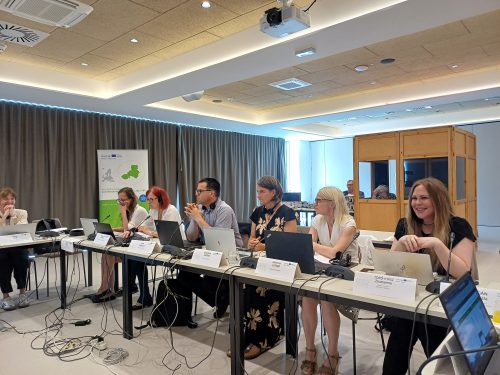
The meeting provided an opportunity to reflect on the achievements of the Interreg Programme and to discuss the next steps in strengthening cooperation between Slovenia and Hungary. The members of the MC were informed about the successful closure of the 2014–2020 programming period, which delivered numerous projects and tangible results benefiting communities, institutions, and citizens on both sides of the border.
The MC also reviewed the current implementation status of the 2021–2027 programme and discussed upcoming activities planned within the programme framework. These discussions highlighted the continuing importance of cross-border cooperation in addressing shared challenges and unlocking common opportunities. Whether in the fields of environmental protection, climate adaptation, tourism development, rural development, or institutional cooperation across borders remains essential for achieving sustainable and long-lasting results.
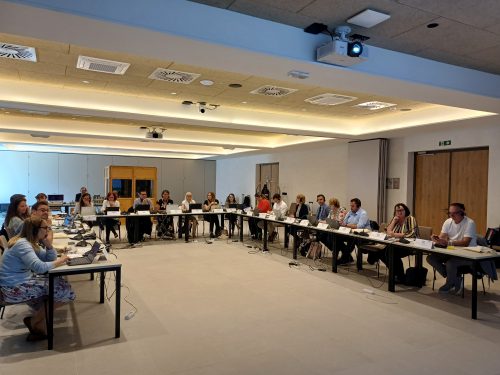
A key item on the agenda was the discussion and final decision on project applications submitted under the 1st deadline of the 2nd Open Call for Proposals for standard projects. The MC members examined 19 administratively compliant and eligible project applications that had successfully passed the assessment process and were presented during the meeting.
Following the discussions, the MC approved 6 new projects for funding, allocating a total of EUR 1,911,583.76 in ERDF support. The newly approved projects represent a diverse range of topics that respond to the needs and priorities of the border region.
- Under Priority 1, which focuses on a greener and more climate-resilient border area, two projects were approved: NBS for locals and CLIMAGINE.
- Under Priority 2, dedicated to strengthening the attractiveness and vitality of the border region, three projects received support: BIKE&SPA SI-HU, CAMINO-SIHU, and Land of Legends.
- Under Priority 3, emphasizing better cooperation governance the project Invest4Rural SI-HU was approved.
Congratulations to all partners of the selected projects!
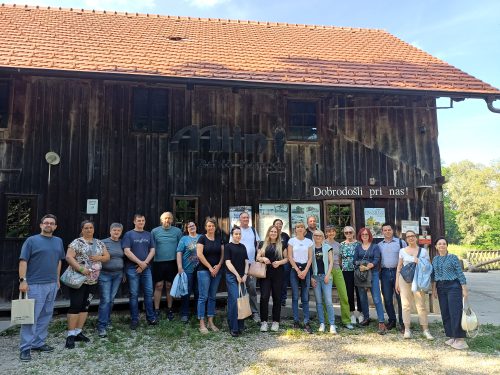
At the end of the first day of the two-day meeting, the MC members visited three projects of the 2021-2027 programming period.
The From Mill to Mill is a project for rural communities and heritage stakeholders, who need sustainable ways to preserve and revitalise historic mills that are slowly disappearing. Therefore, the partners created the first cross-border, open-air milling museum in the region — a unique network of restored mills turned into an engaging tourist destination. With this help, they can transform cultural heritage into economic opportunity through tourism, education, and community engagement. From the Babičev mlin (Veržej), which is participating in the project, the participants floated down the Mura River in rafts to Love Island in Ižakovci, where they were introduced to anoter two cofinanced projects.
The Kul-Well is for rural tourism providers and cultural actors in the Slovenian–Hungarian border region, who need sustainable ways to strengthen well-being and local development. Therefore, the partnership is implementing a cross-border cultural and wellness tourism initiative that builds on shared traditions and rural identity by co-creating joint quality standards for unique cultural experiences, compiled in a practical handbook for wellbeing-oriented tourism. With the help of the project, they can test the standards through pilot actions and join a permanent public-private network linked to the Amazon of Europe Hub, enabling stakeholders to modernise local traditions and offer inclusive, high-value experiences for different target groups seeking authentic nature-based retreats.
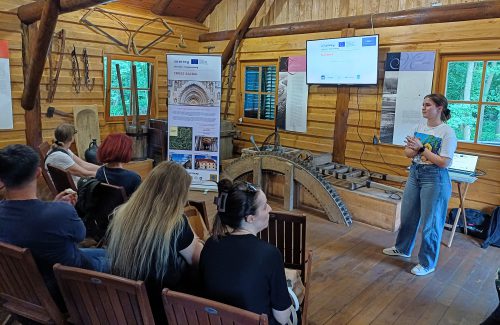
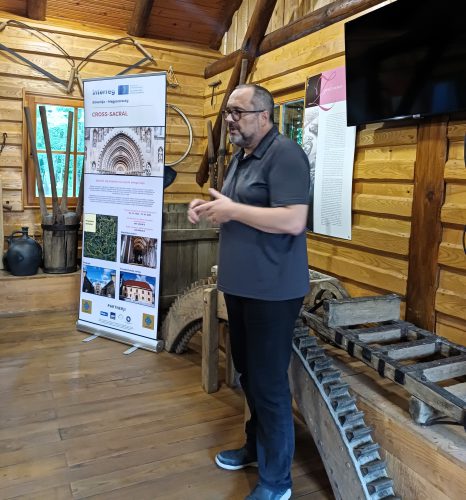
The CROSS-SACRAL project is for cultural heritage seekers, local communities, and tourism stakeholders in the Slovenian–Hungarian border region, who need a sustainable, engaging way to preserve and experience shared sacred heritage beyond national and religious boundaries. Therefore, the project partners is developing a cross-border tourism concept that connects sacred sites and traditions across Slovenia and Hungary through digital and community-based solutions. With this project, they can discover connected sacred routes and sites through personalized digital tools, engage with local traditions and providers, and experience interfaith heritage in a respectful, sustainable way.
The meeting also included an overview of communication and visibility activities, demonstrating how programme achievements are being shared with citizens and stakeholders throughout the programme area. In addition, the members of the MC received information on preparations and discussions related to the post-2027 period.
The decisions taken demonstrate the strong commitment of Slovenia and Hungary to working together for the benefit of their shared border region. Through joint projects, shared expertise, and coordinated action, the Interreg Programme continues to build bridges between communities, creating lasting partnerships and delivering concrete benefits that would be difficult to achieve through national efforts alone.
Follow the programme news, subscribe to our newsletter, and like our Facebook page to keep up to date with what’s new and what’s happening in the programme.


Leave A Comment