


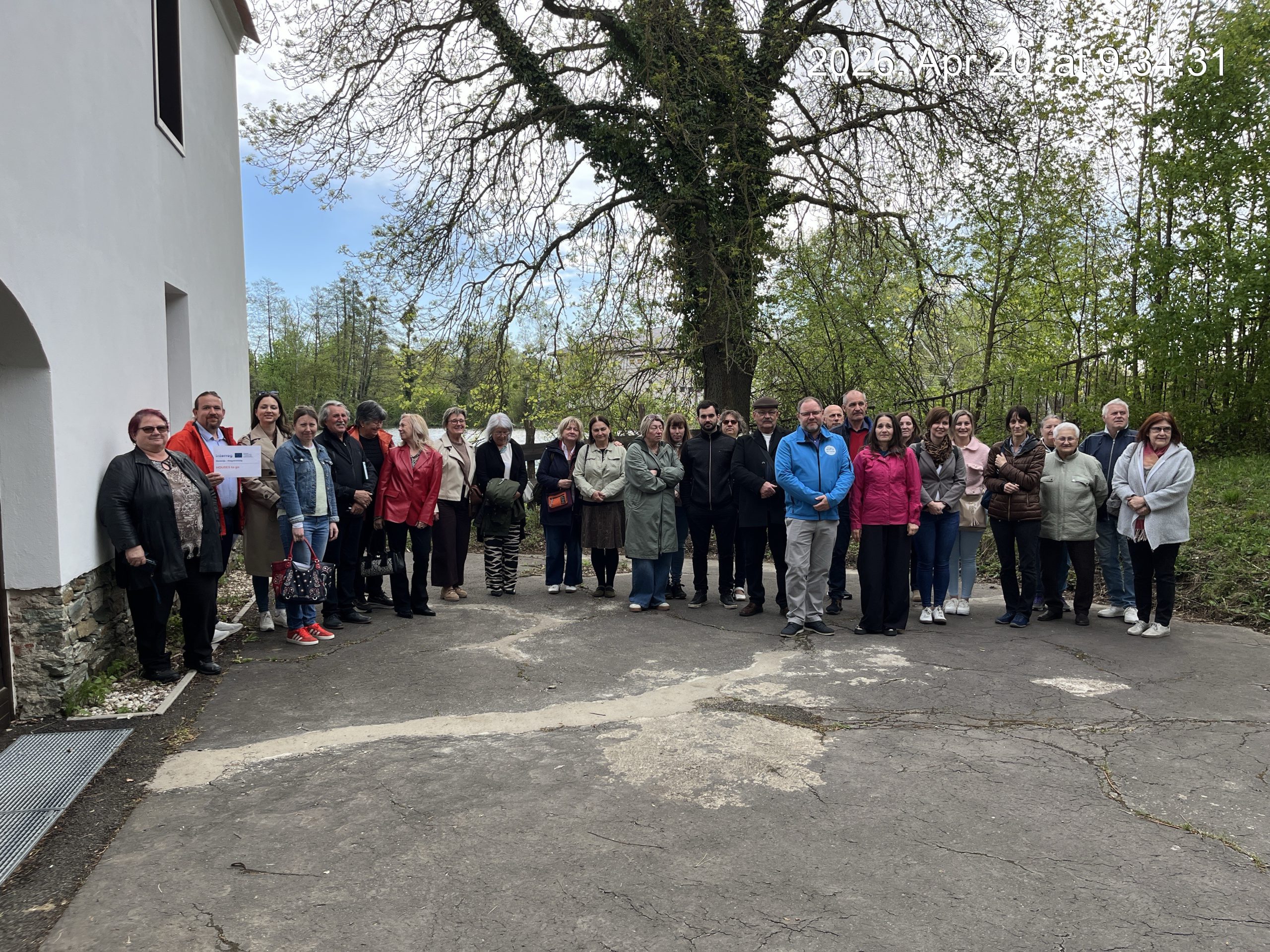
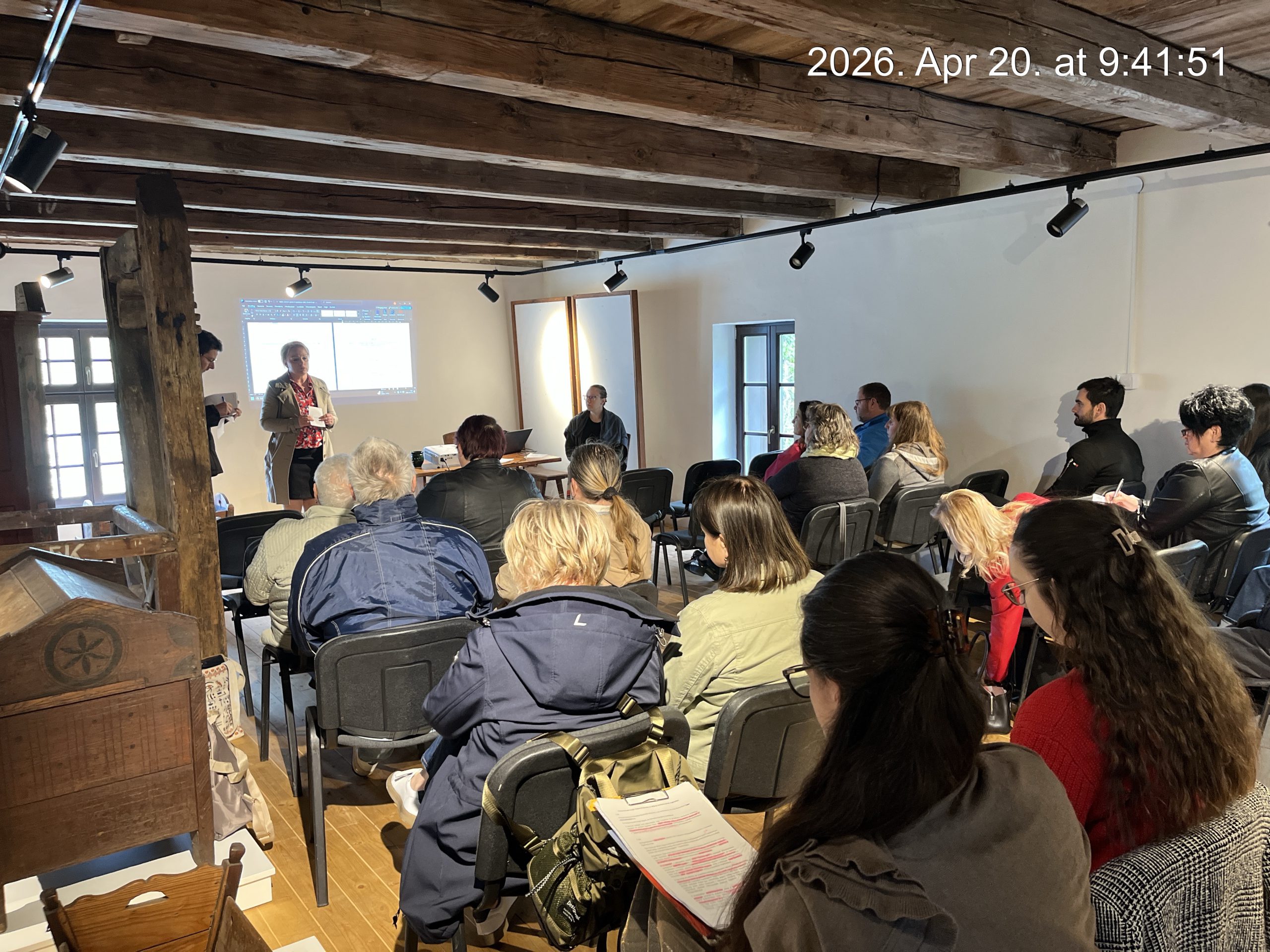
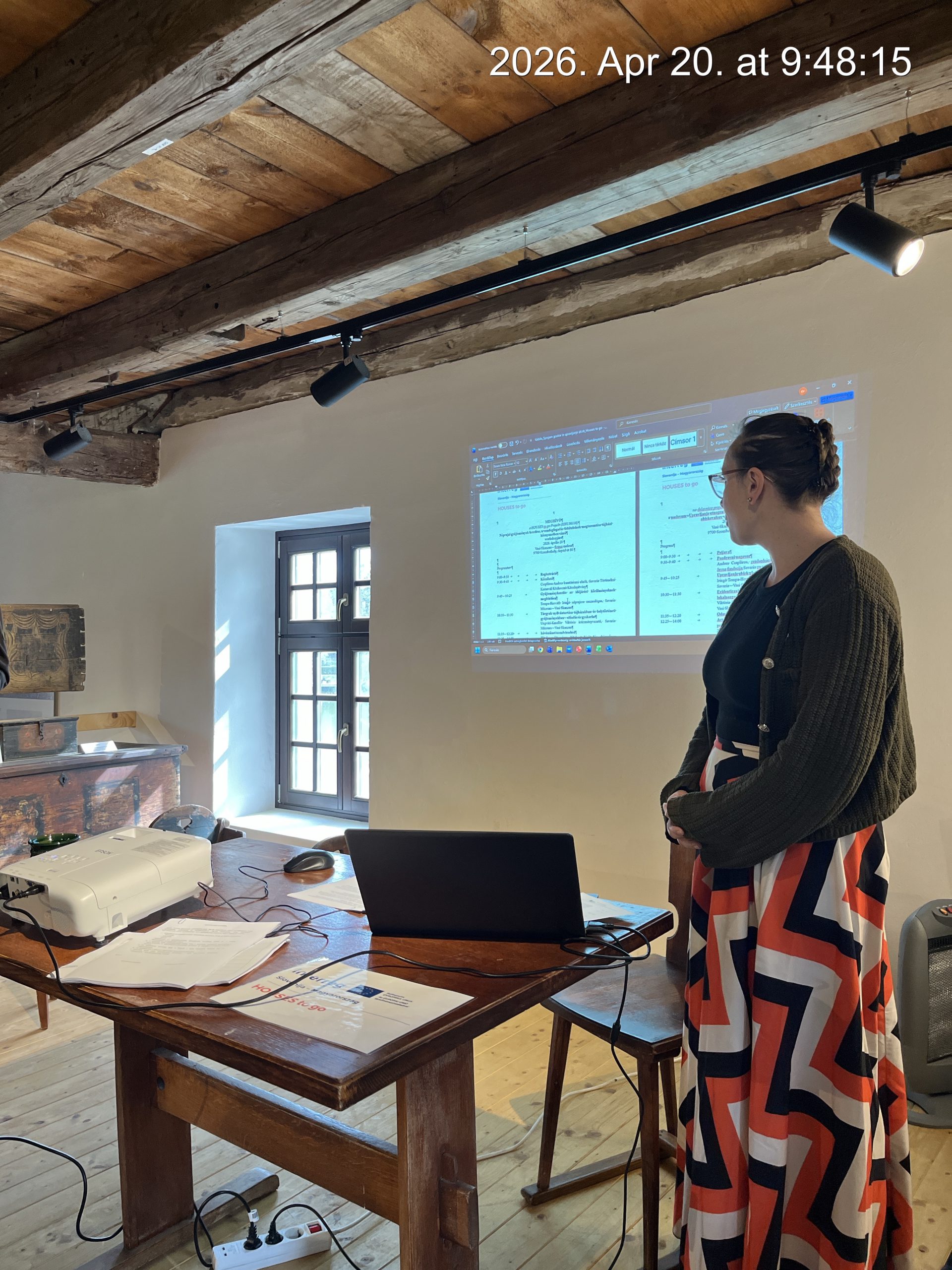
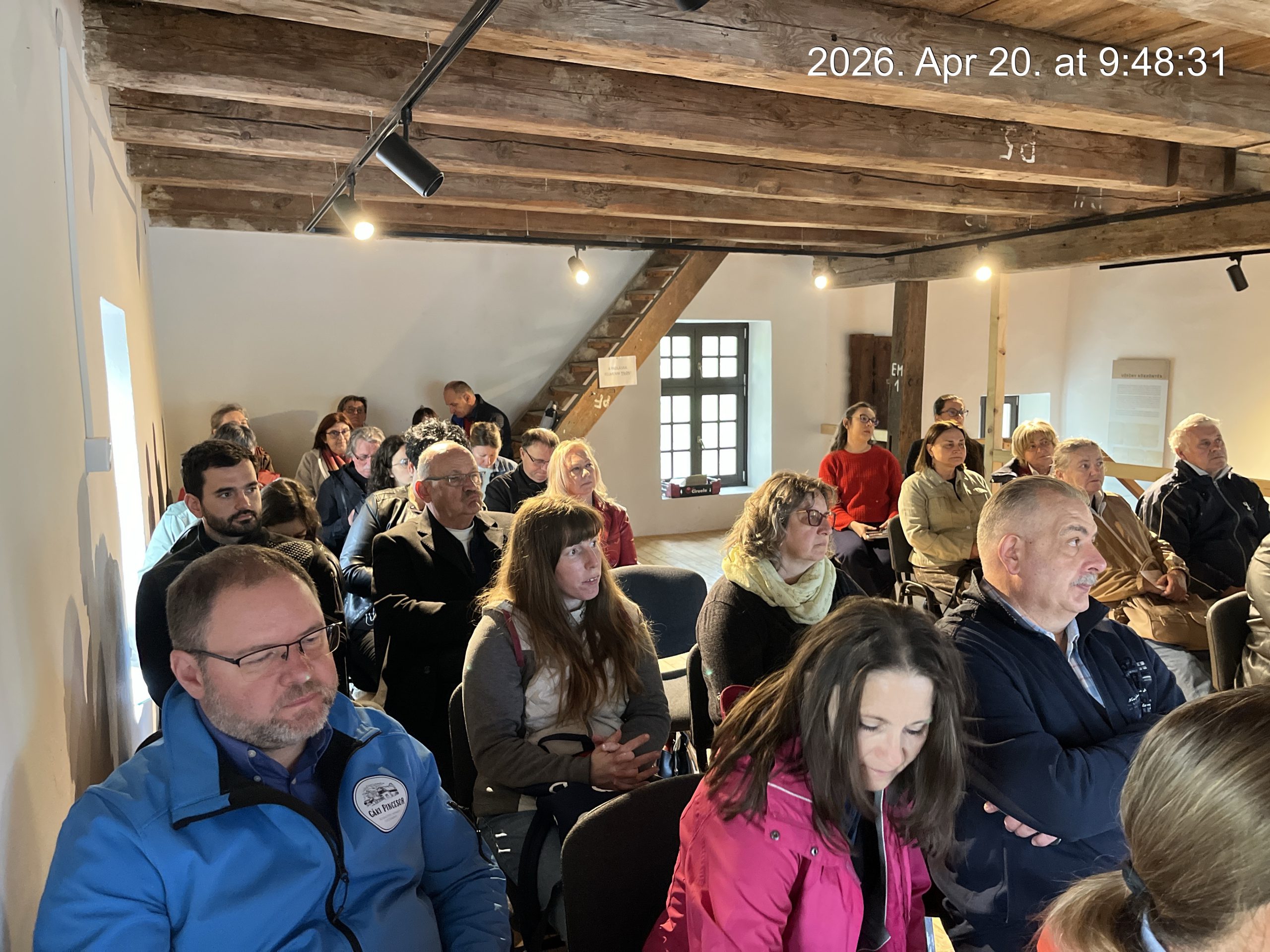
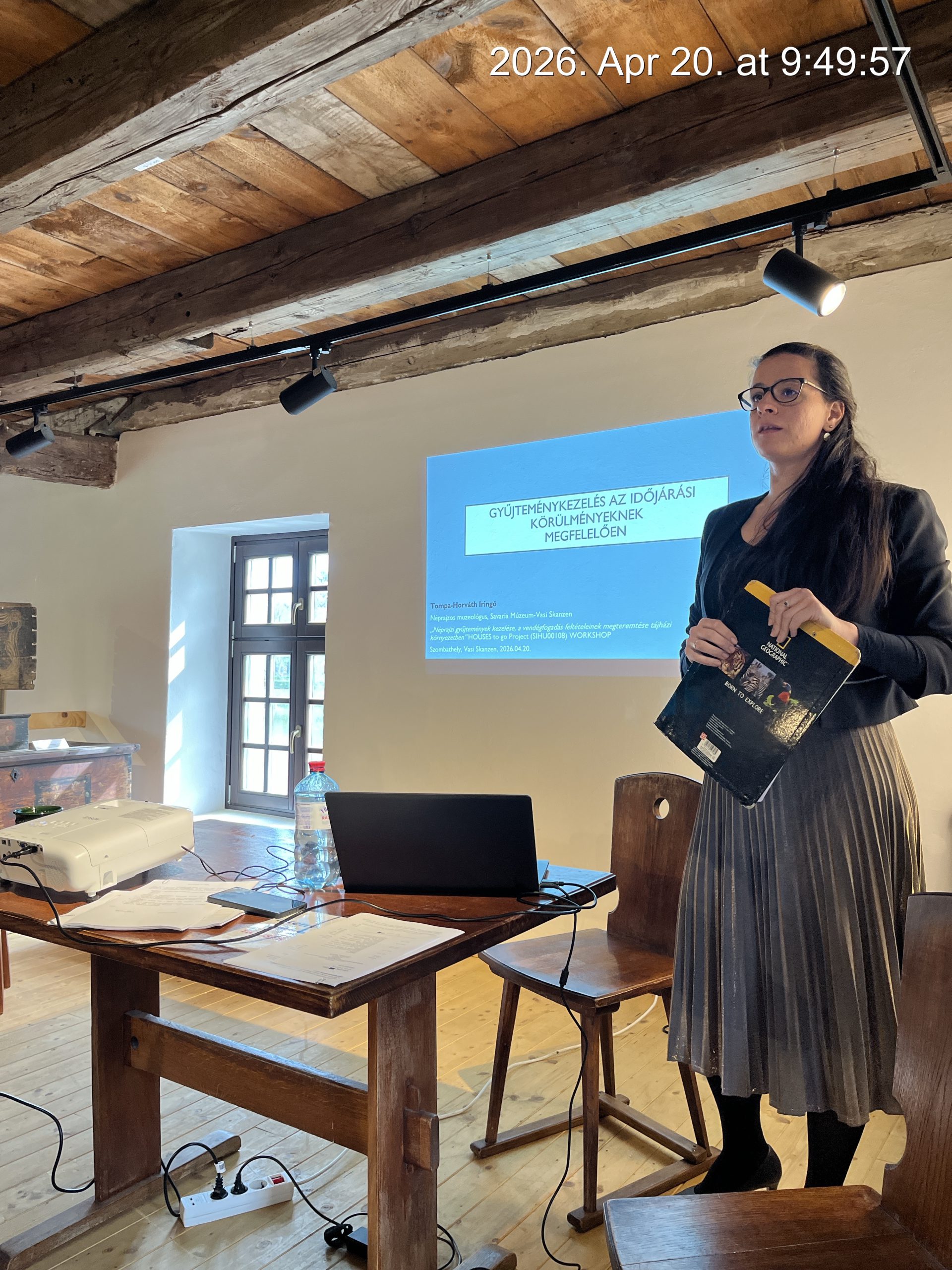
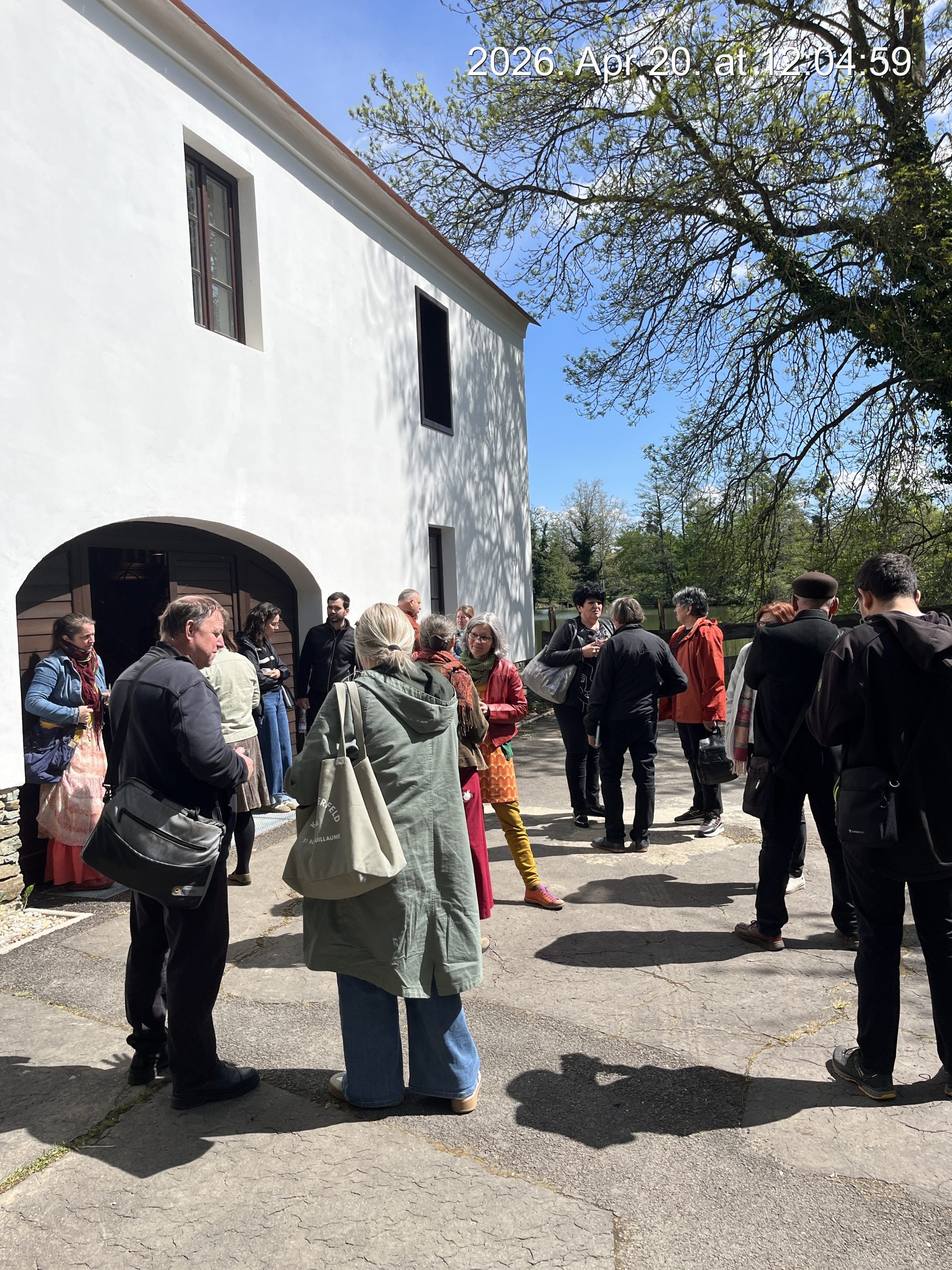
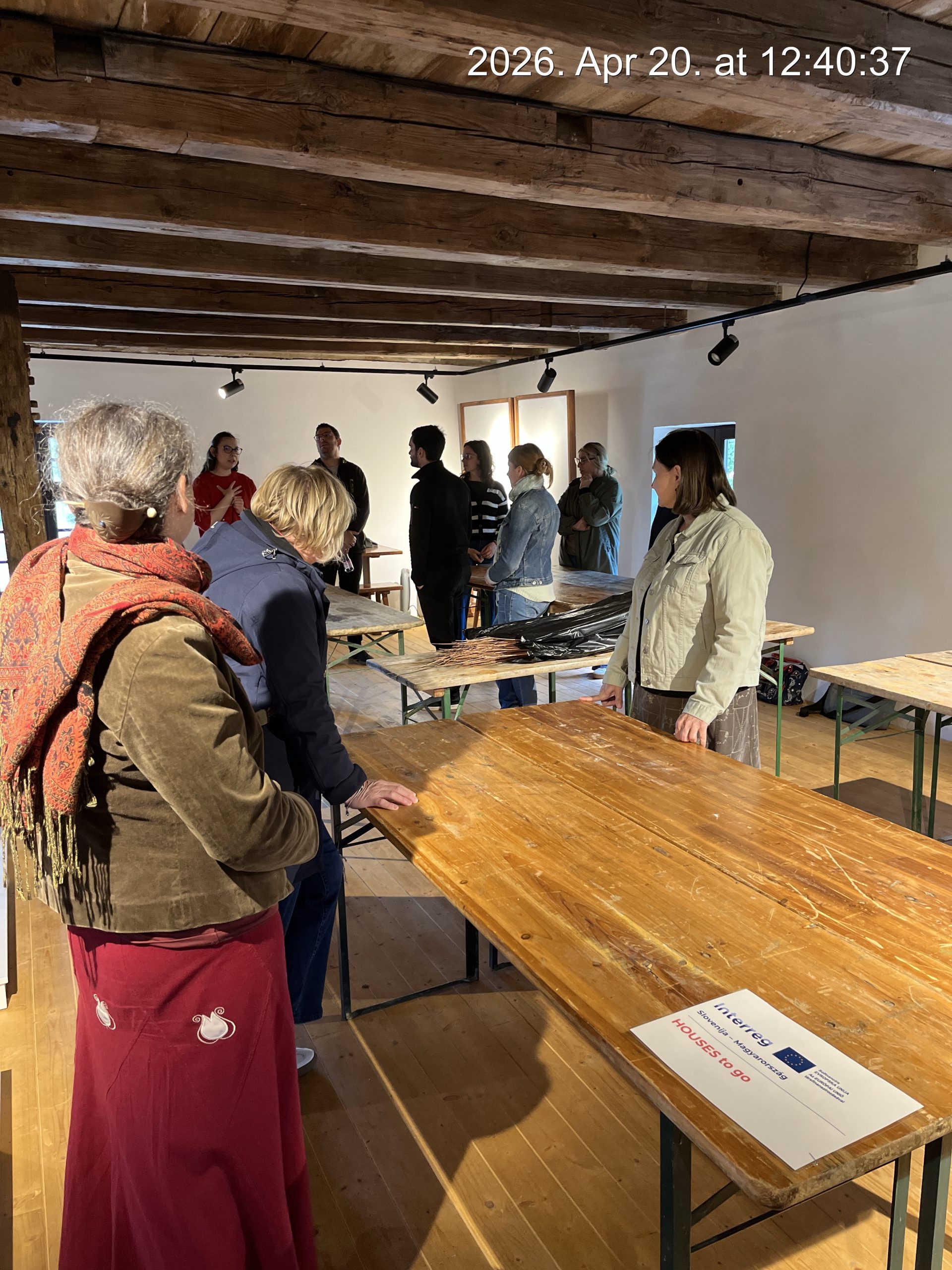
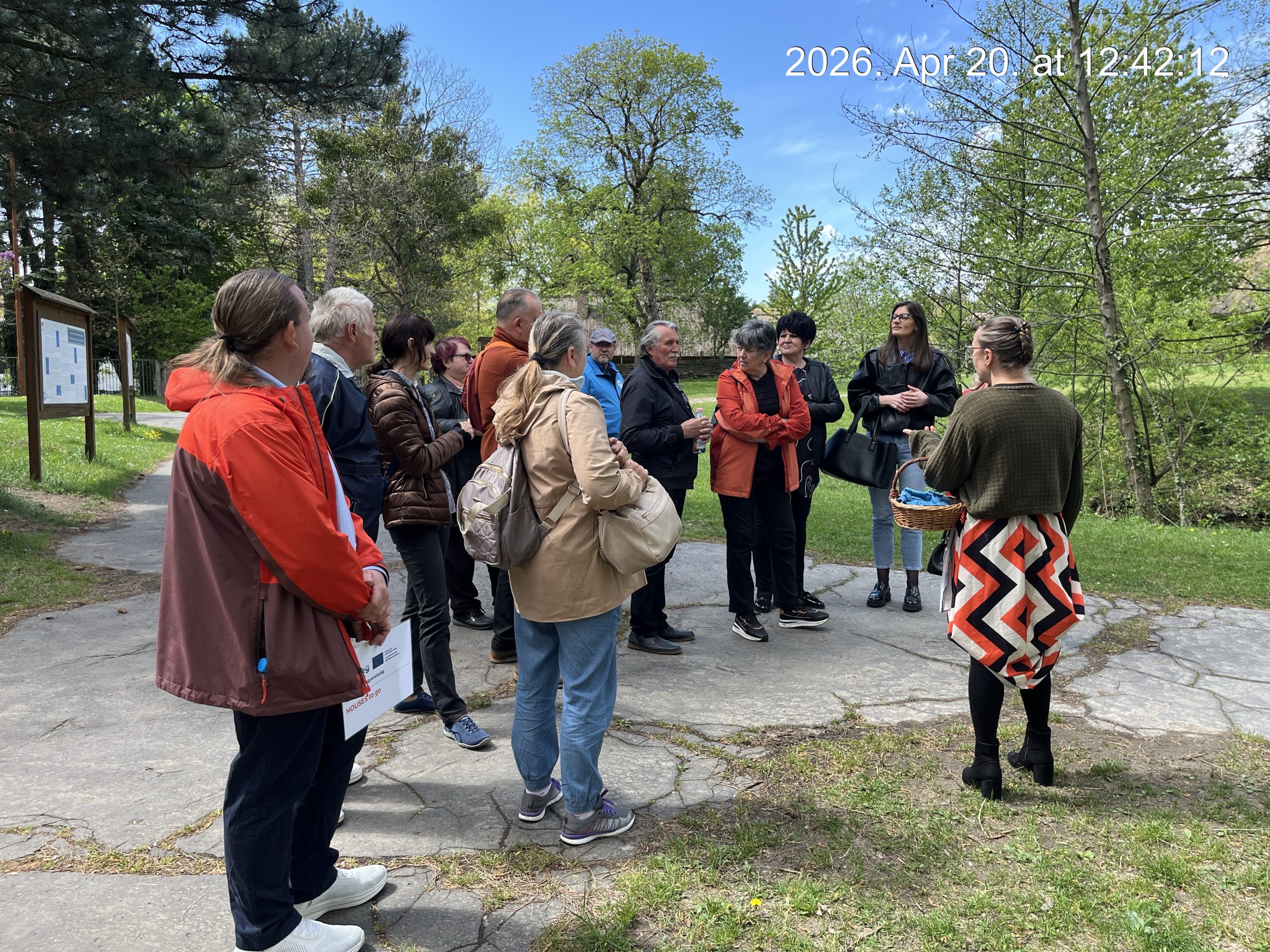
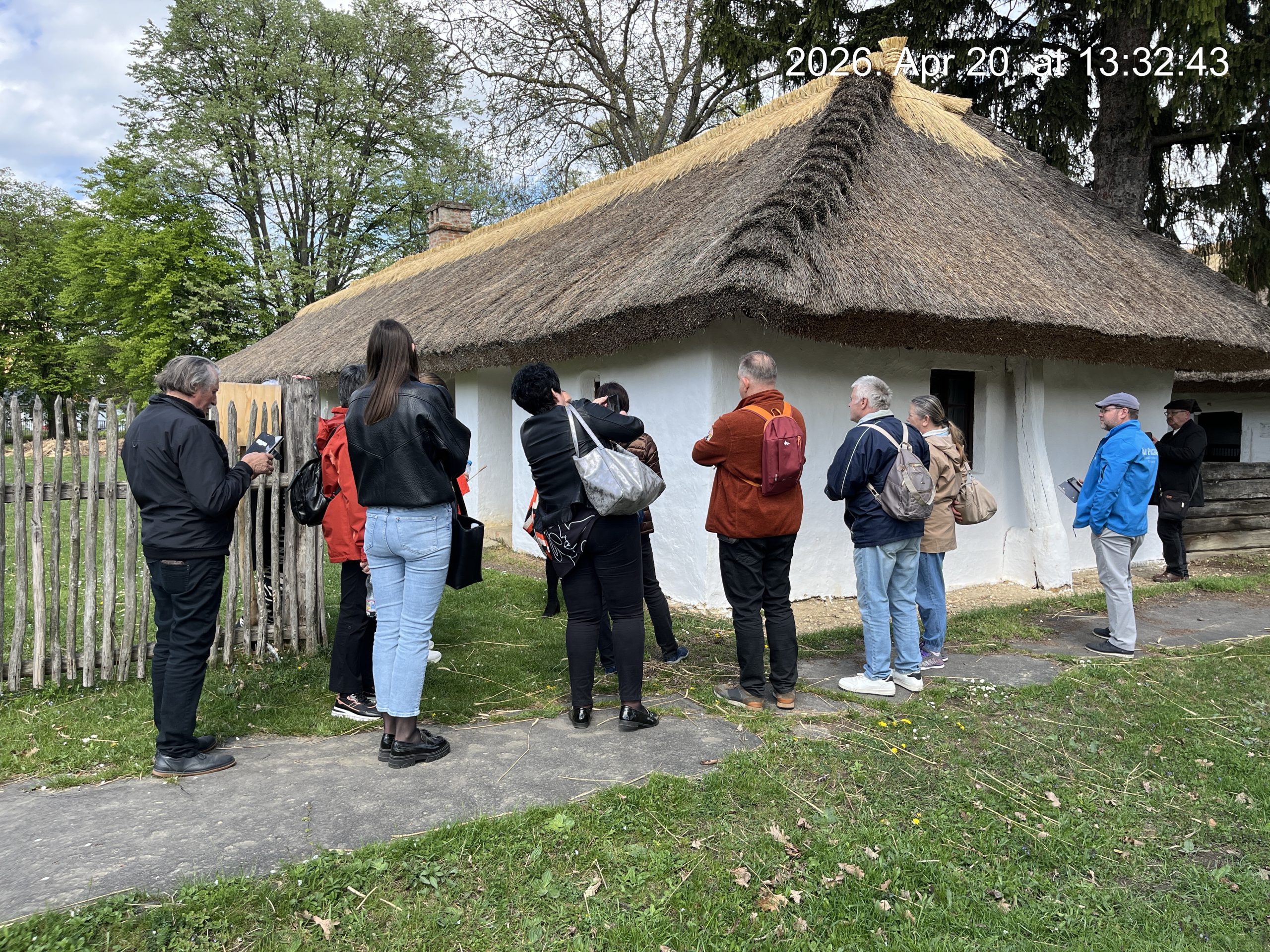
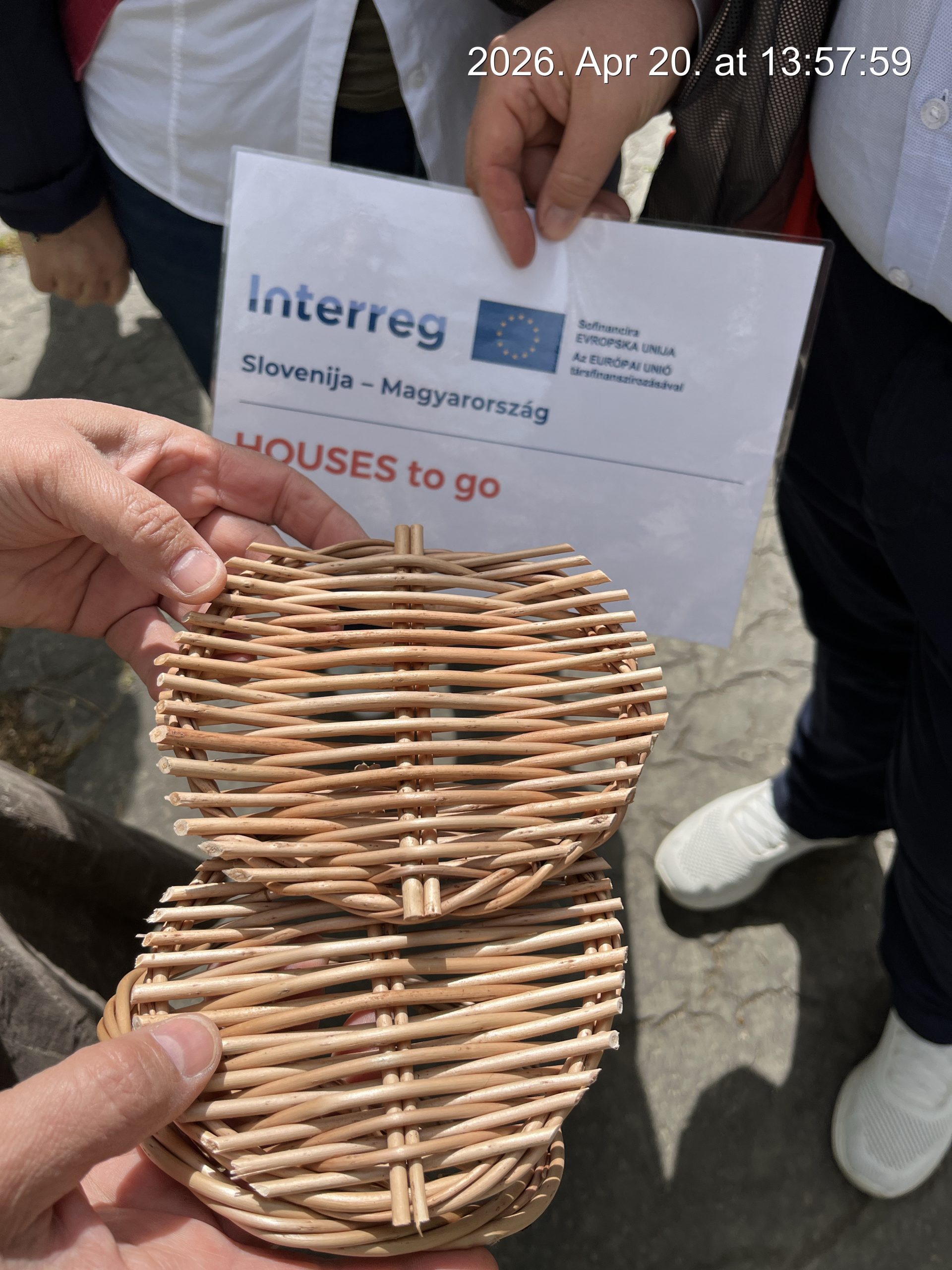
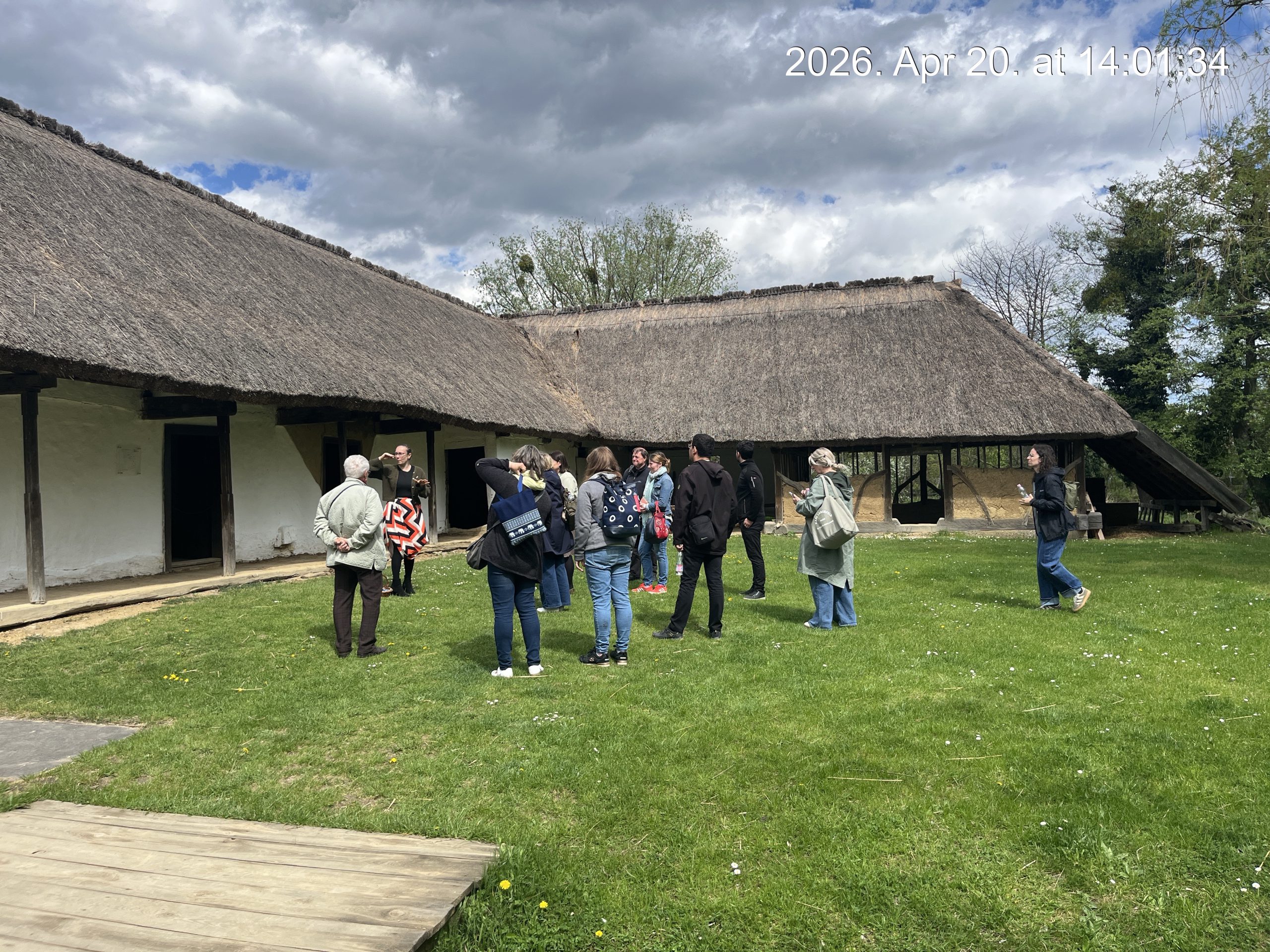
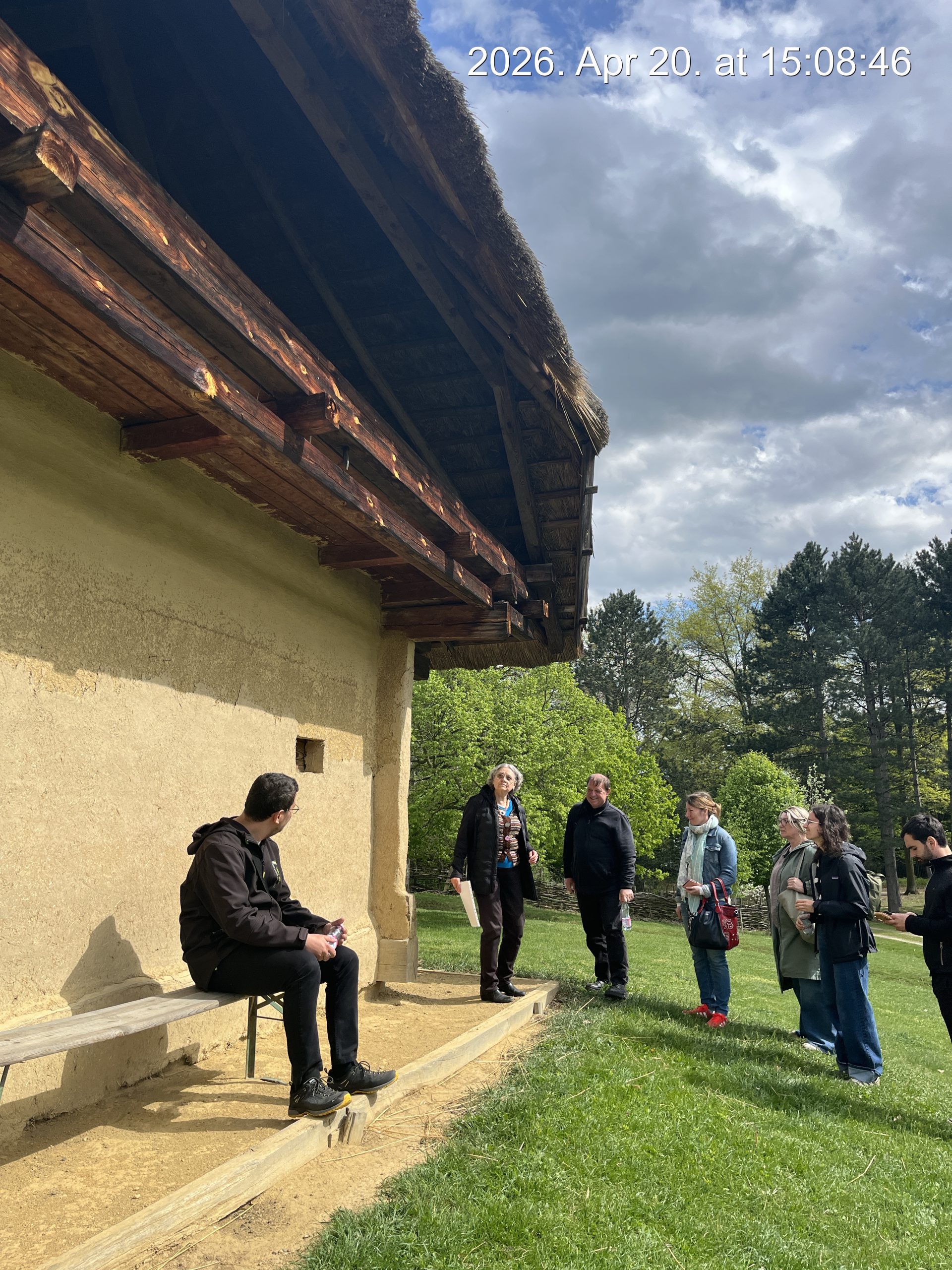
The workshop was hosted by the Savaria Museum – Vasi Skanzen in Szombathely, where Hungarian and Slovenian experts could jointly deepen their knowledge of current issues in the operation of country houses. The organizers provided Hungarian-Slovenian interpretation throughout the entire program. The workshop began with a ceremonial opening following the arrival and registration of the participants. Andrea Csapláros, the chairman of the board of trustees of the Savaria Historical Carnival Public Benefit Foundation and the director of the Savaria Museum, welcomed those present. In her speech, she emphasized the prominent role of professional cooperation and knowledge sharing in the sustainable operation and development of country houses. In the first presentation of the morning professional program, ethnographic museologist Iringó Tompa-Horváth presented the practice of collection management adapted to weather conditions. The participants were able to gain insight into how different climatic effects affect the condition of outdoor and partially outdoor collections, and what preventive and conservation methods can be used for the long-term preservation of objects. The presentation was made illustrative and directly usable by practical examples applied in the Vasi Skanzen. Afterwards, Viktória Ungvári-Kmellár, the head of the Vasi Skanzen, gave a presentation on the issues of registering objects kept in country houses and local history collections. During the professional block, the basic principles of inventorying and documentation were presented, as well as the challenges and possible solutions that arise during everyday collection management. The theoretical knowledge was supplemented by a practical session, which provided the participants with the opportunity to deepen their knowledge through concrete examples. The coffee break and sandwich lunch following the morning lectures not only provided an opportunity to recharge their batteries, but also provided space for informal professional discussions and exchange of experiences. In the first block of the afternoon program, a complex, practice-oriented session was held under the leadership of museum educator Zita Sztankovánszki, which explored the relationship between authentic collections and authentic knowledge transfer. During the program, accompanied by craft activities, the participants made a woven object from cane, while gaining direct experience of how the presentation of material heritage can be connected with experiential and interactive learning. In the rest of the afternoon, the participants took part in a professional guided tour of the Vasi Skanzen. During the tour, Viktória Ungvári-Kmellár explained in detail the professional aspects related to the individual buildings and interiors, and presented the possibilities of interpreting the collections and presenting them in a visitor-friendly way. As the closing program of the workshop, under the leadership of Mária Mukicsné Kozár, ethnographer and corresponding member of the Slovenian Academy, the presentation of the Slovenian Smoke House was held in two groups. During the presentation, the participants received a comprehensive picture of the characteristics of this particular building type, as well as insight into local traditions and authentic architectural and lifestyle characteristics.
Photos by HOUSES to go


Leave A Comment